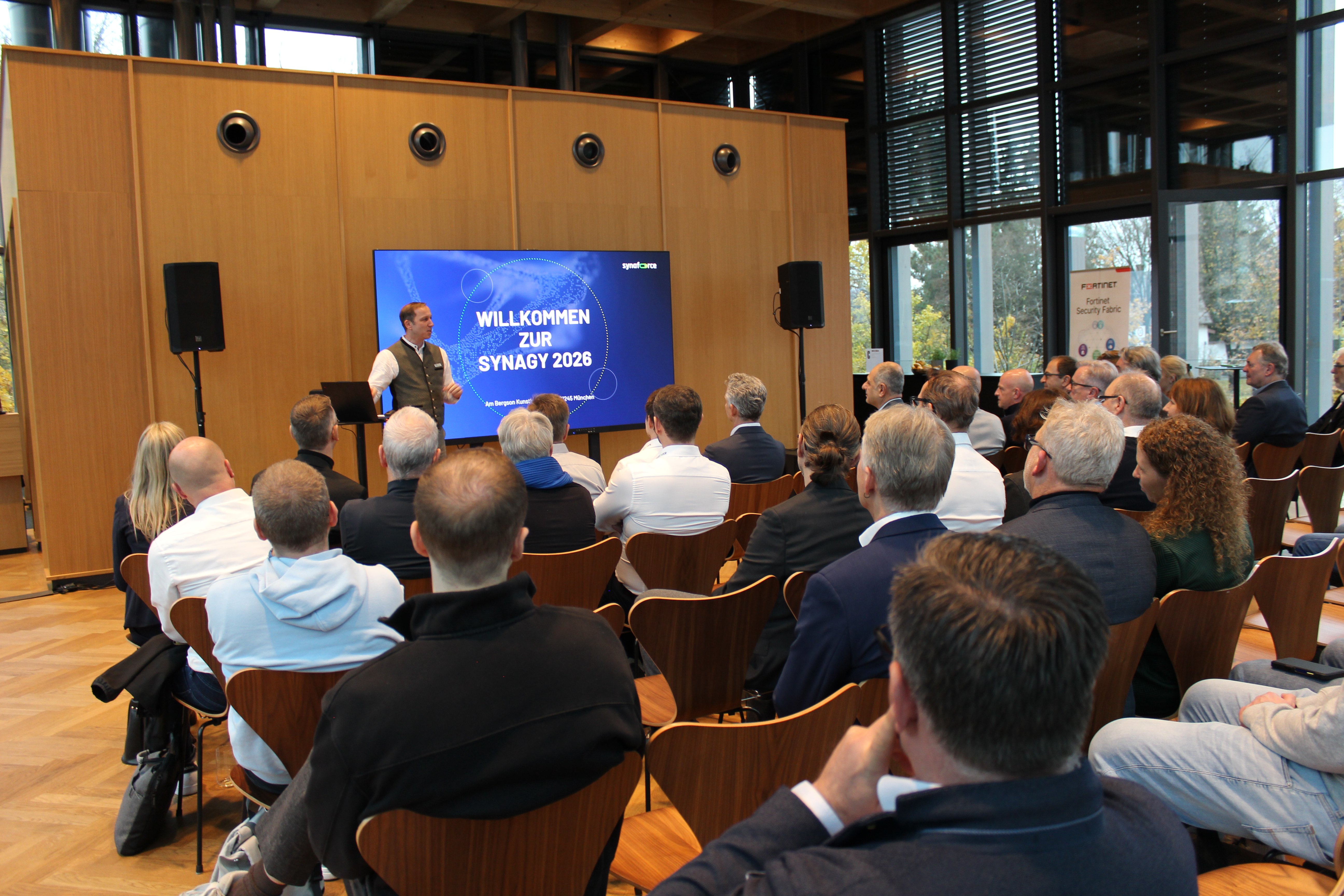
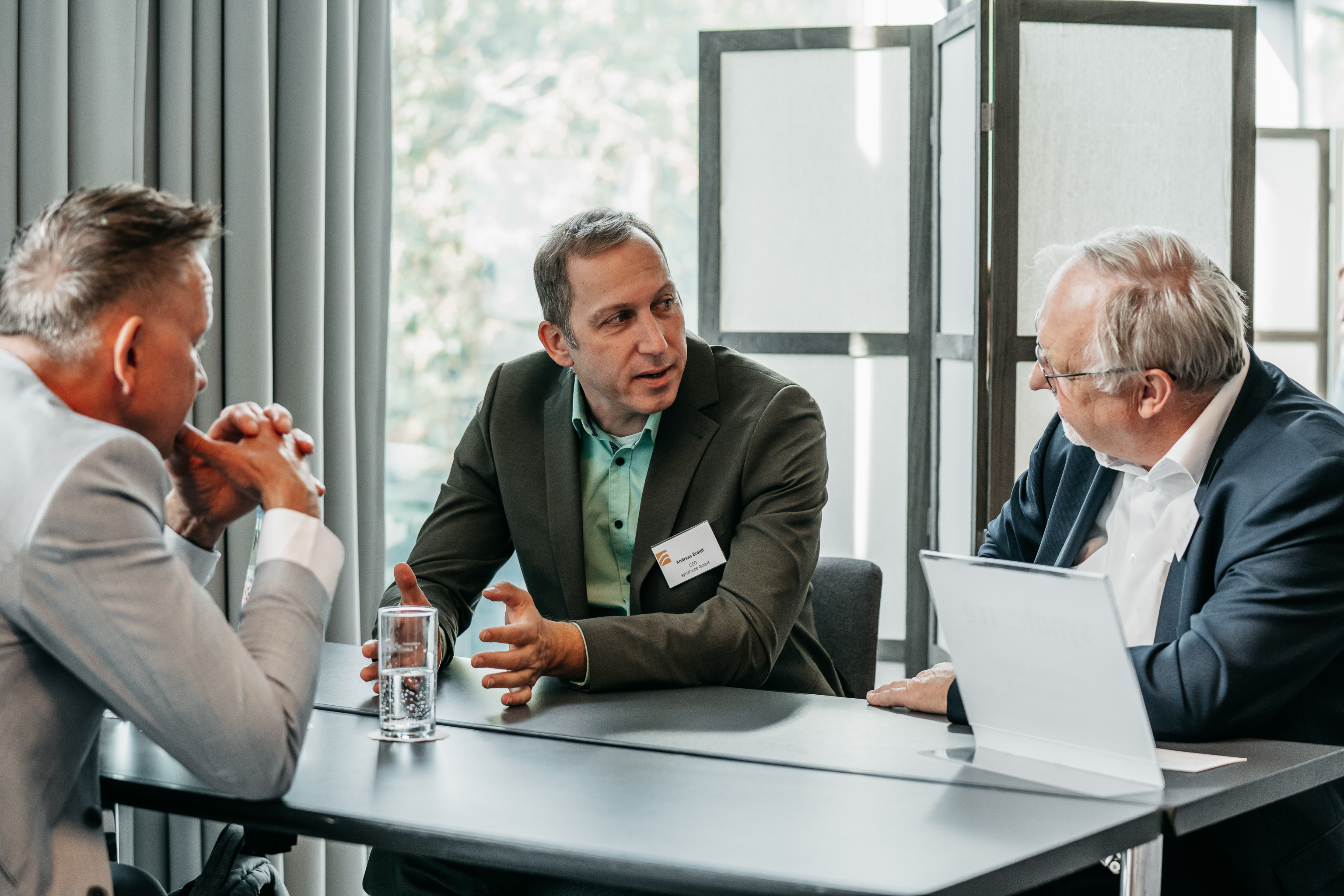
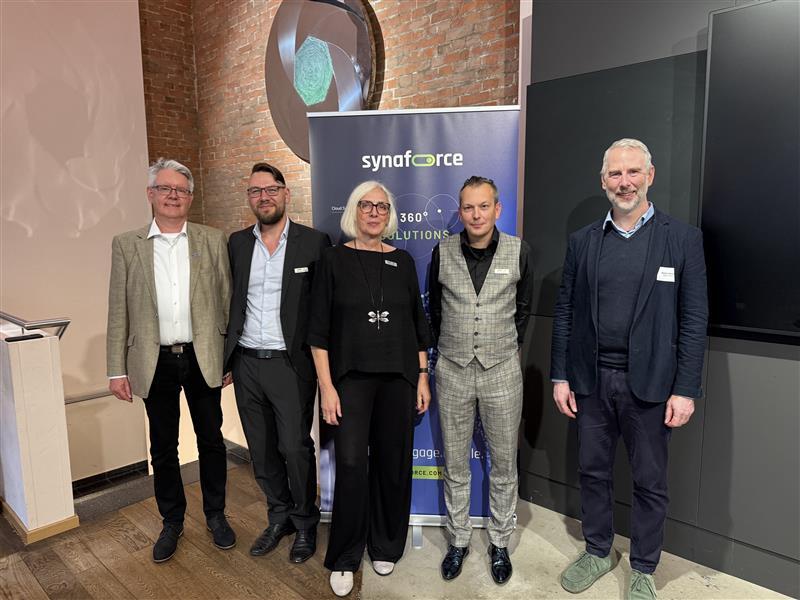
At the second synaGy event at the Bergson Kunstkraftwerk in Munich, we spent an afternoon and an evening discussing a single question: Who actually has control over data, systems, and decisions? Speakers from the business world, research, the social sector, and public administration took the stage. And the longer the evening went on, the clearer it became: It was rarely about technology. It was almost always about responsibility—and how easily we relinquish it without even realizing it.
Sovereignty is not a product in a catalog
Digital sovereignty is currently becoming a selling point. It’s printed on slides, in requests for proposals, and on trade show booths. That’s not fundamentally wrong—but it shifts the focus.
After all, sovereignty isn’t achieved by purchasing a solution. It arises from decisions that often seem unspectacular: Where is our data stored? Who has technical access to it—and under what legal authority? What happens if a provider triples its prices, discontinues its product, or is acquired by a corporation? Could we still switch providers then? And if so, how long would that take?
These questions are uncomfortable because the answer is often: We don’t know for sure. That was the most honest moment at synaGy—that no one in the room was looking for easy answers.
Three thematic blocks, one interconnected whole
The program was structured around three areas that, in practice, are inseparable:
Digital sovereignty. Not as a political buzzword, but as a question of dependencies. If you don’t understand your infrastructure, you can’t control it.
Cybersecurity. Resilience in the face of an ever-escalating threat landscape—and under regulatory pressure that many organizations are only now beginning to feel. Security is less a matter of tools than of responsibilities.
Artificial intelligence. This is where things became particularly concrete. AI promises productivity but demands data. And the more useful a model becomes, the harder it is to back out. Anyone who feeds data into a system today is making a decision about tomorrow.
The common thread: In all three areas, the goal is to maintain the ability to act. Not about isolation—but about the ability to make decisions for oneself.
A Practical Example from the Social Sector
Moritz Ch. Zeiler demonstrated that this issue doesn’t just affect large corporations. He is the Chairman of the Board and Chief Financial Officer of the Katholisches Jugendsozialwerk München e.V.—an organization with facilities and services at multiple locations in Bavaria, ranging from daycare centers to support for people with disabilities.
In other words, it is an organization that works with particularly sensitive data yet does not have the IT resources of a DAX-listed corporation. His presentation explored precisely this tension.
“We work with data from people who did not choose to receive our support. For us, therefore, data protection is not a formality, but part of our mission. With synaforce, we’ve set up our IT in such a way that we know where our data is stored and who can access it—without needing our own corporate-scale IT department. For me, that’s the real point: sovereignty must also be achievable for organizations that don’t have a technical background.” Moritz Ch. Zeiler, Chairman of the Board and Chief Financial Officer, Katholisches Jugendsozialwerk München e.V.
The statement that drew agreement from the audience: Sovereignty is not a question of company size. It is a question of clarity regarding one’s own situation.
What We Take Away
We take three things away from this:
Sovereignty is a decision, not a purchase. It cannot be bought or delegated—it can only be made consciously.
It begins with an honest assessment of the current situation. If you don’t know where your own data is stored and what dependencies exist, you can’t develop a strategy—only a hope.
It is not a matter of size. The most compelling examples of the evening did not come from the largest organizations, but from those that asked themselves the uncomfortable questions earlier on.
This is what we work on every day at synaforce: helping companies, social service providers, and government agencies understand their IT and security and take control of them themselves. Not because sovereignty is a trend—but because the ability to act is the prerequisite for everything else.
Thank you to Melanie Rintsch for moderating, to our speakers Prof. Dr. Andreas Both, Jonas Bayer, Moritz Ch. Zeiler, and Tobias Lehner, to the team at the Bergson Kunstkraftwerk—and to all the guests for conversations that continued well into the evening.
#synaforce#synaGy #DigitalSovereignty #Cybersecurity #AI