On September 28 and 29, we attended the Smart Hospital Excellence Forum hosted by Smart Bridges Healthcare in Frankfurt. Here’s a look back at two days spent with hospital administrators and IT leaders, and at the question of why emergency plans are so rarely tested.
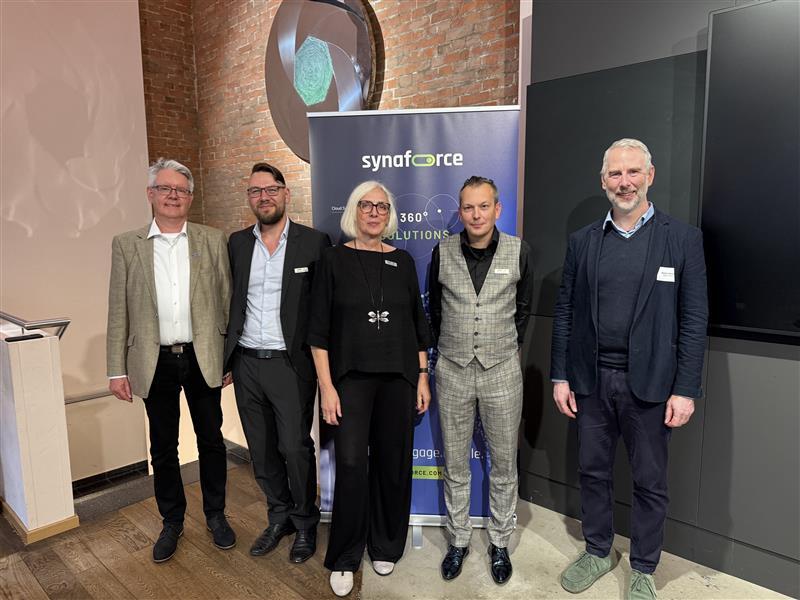
In the run-up to the forum, we asked a question: When was the last time your hospital’s IT system was tested for recovery under realistic conditions? We wanted to find out how hospitals handle this. Andreas Braidt and Peter Hartl spent two days at the Radisson Blu in Frankfurt and did one thing above all else: they listened.
The plan exists. The drill is missing.
In almost all conversations, one thing was clear: there is an emergency manual. Regulatory requirements, audits, and—not least—the cyberattacks on German hospitals in recent years have ensured that the issue has made its way onto the management’s agenda.
The situation is different when it comes to testing. A recovery under real-world conditions means that systems are shut down in a controlled manner while patient care continues on the wards. Understandably, many hospitals shy away from this risk. The result is a plan that no one knows for sure will hold up in a real emergency.
Yet a test does not have to involve a complete system failure. Individual systems can be restored during maintenance windows, procedures can be run through in tabletop exercises, or a restart can be rehearsed in an isolated environment. What matters is that drills are conducted at all and that the results are incorporated back into the plan.
The gap often lies between organizations
The second point has been of particular concern to us as infrastructure operators. Many emergency plans clearly outline what happens internally. But when external service providers come into play, the plans become thin on the ground.
Who is notified first in the event of an outage at 3:00 a.m.? Who has decision-making authority at the service provider, and who does on the hospital’s side? In what order are systems restored, and does the service provider know that the laboratory system is more important to the hospital than the intranet?
Such questions cannot be resolved in an emergency. They belong in contracts, in escalation plans, and above all in joint drills. A recovery process that the hospital’s IT department and the service provider have never run through together is essentially untested, even if both sides have individually verified their respective parts.
What this means for us
We operate infrastructure for organizations where an outage has immediate consequences. From Frankfurt, we take away above all the commitment to take collaboration in an emergency just as seriously as the technology itself. Specifically, this means for us: documenting responsibilities with our clients in writing in advance, jointly defining priorities for the recovery process, and offering drills that do not jeopardize hospital operations.
Thank You
Our thanks go to Smart Bridges Healthcare for a format that facilitates genuine conversations rather than just booth presentations, and to all participants who spoke openly about their experiences. Anyone who would like to continue the conversation can reach Andreas Braidt directly via LinkedIn or through our contact page.
#synaforce#SmartHospitalCongress #HospitalIT #Healthcare









.jpg)